

Key takeaway: Sleeping in a Canadian lighthouse transforms a simple stay into a historical immersion, ranging from rustic off-grid towers to luxury inns. This experience connects travelers with maritime heritage through unique settings like PEI’s West Point or Quebec’s Pot-à-l’Eau-de-Vie. Notably, the Pot-à-l’Eau-de-Vie lighthouse offers one of the rare opportunities to sleep directly inside the 1862 tower.
Canada manages hundreds of historic beacons, yet only a select few allow travelers to sleep within their original lightkeeper quarters or heritage towers. These rare overnight stays offer a direct connection to maritime history, from the 1809 foundations of Ile Verte to the mid-century charm of the Mingan Archipelago.
Finding these remote escapes often means navigating complex boat transfers or booking ten months in advance to secure a room. This guide breaks down Sleeping in a Lighthouse: Canada’s Most Unusual Overnight Stays to help you choose between rustic island isolation and luxury coastal inns.
- Selecting the Right Lighthouse Stays in Canada
- 7 Facts About Sleeping in the Pot-a-l-Eau-de-Vie Tower
- Ile Verte: Staying at the Saint Lawrence Pioneer
- Ile aux Perroquets: Mid-Century Charm in Mingan
- Is West Point Lighthouse the Most Luxury Stay in PEI?
- Cape Anguille: Newfoundland’s Rugged Heritage Inn
- Cap-Chat: Group Stays in the Gaspé Peninsula
Selecting the Right Lighthouse Stays in Canada
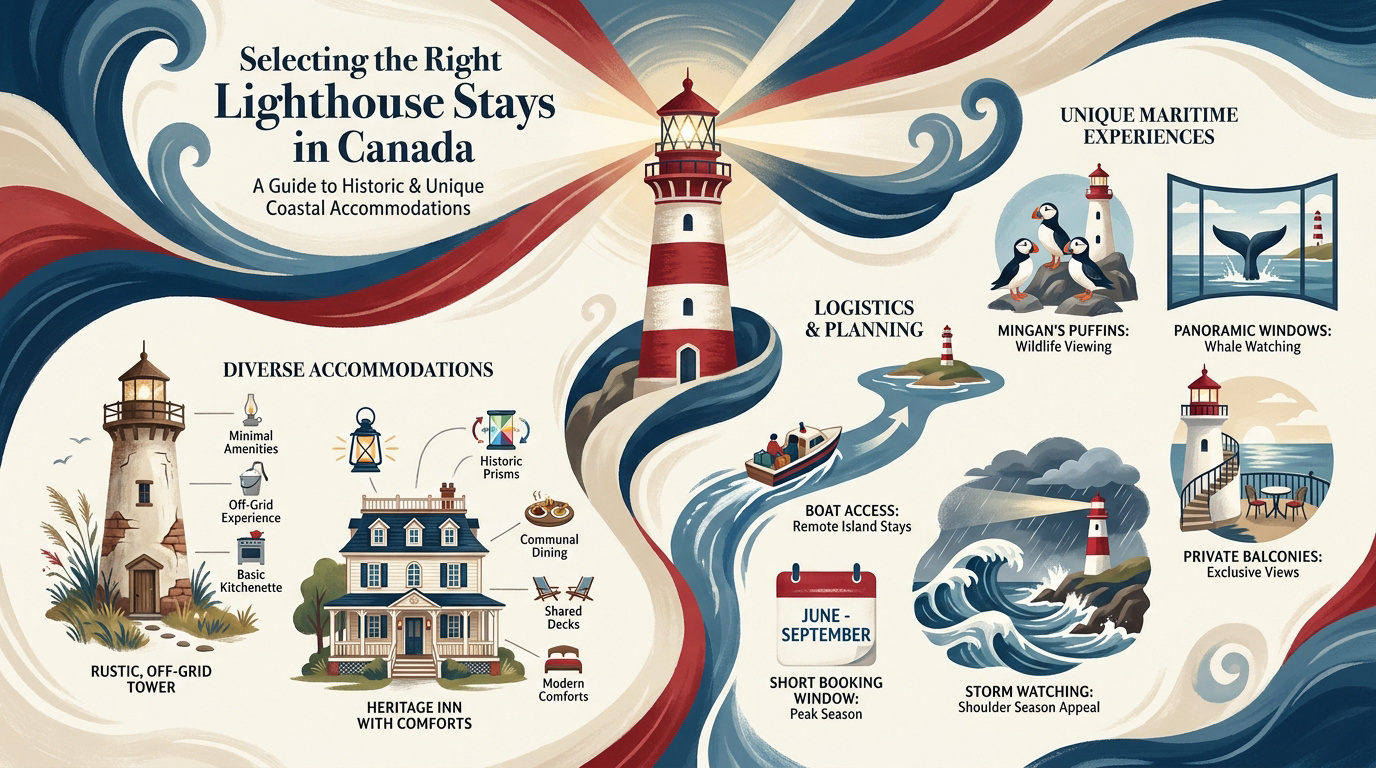
Canada offers diverse lighthouse stays from PEI’s West Point to Quebec’s Pot-à-l’Eau-de-Vie. These heritage sites feature vintage rotating prisms, widow’s walks, and modern amenities like hot tubs, catering to both rustic and luxury travelers.
Matching Comfort Levels With Your Expectations
Sleeping in a Lighthouse: Canada’s Most Unusual Overnight Stays ranges from raw, off-grid towers to full-service heritage inns. Modern hospitality suites have replaced basic lightkeeper quarters in many coastal regions.
Expect shared decks, kitchenettes, and panoramic windows ideal for whale watching. Some sites even feature private hot tubs and Wi-Fi.
Choose communal dining for social vibes or private balconies for solitude. Both offer unique maritime charm.
Navigating Remote Island Logistics and Seasons
Drive-up sites contrast sharply with boat-access islands. Reaching remote maritime locations like Mingan requires careful logistical planning and scheduled shuttle transfers.
Booking windows are tight. Most coastal stays operate strictly from June to September due to harsh Atlantic weather.
Storm watching has massive appeal. Shoulder seasons offer dramatic, crashing wave views for brave travelers.
7 Facts About Sleeping in the Pot-a-l-Eau-de-Vie Tower
Beyond general planning, specific historic towers like Pot-à-l’Eau-de-Vie offer a deep dive into 19th-century maritime architecture and bird sanctuary life.
Built in 1862, this stone tower stands firmly in the middle of the St. Lawrence. It offers a rare intimacy with only three guest rooms available. You are literally sleeping inside a piece of Canadian history.
Forget modern grids here. There is no electricity or running water in the tower. You live by the soft glow of kerosene lamps, listening to razorbills nesting just outside. It is the real keeper experience, raw and authentic.
Your stay includes boat transfers and guided tours of the archipelago’s secrets. The small dining area serves regional gastronomy that highlights local flavors. It is a “bring your own wine” affair, adding a personal touch to dinner.
This site is a vital ecological sanctuary. Visitors must follow strict conservation rules to protect the local wildlife. You are a guest of nature first, and a tourist second.
While the Pot-à-l’Eau-de-Vie tower is isolated by water, the historic site at Ile Verte provides a different perspective as the oldest light station on the river.
Ile Verte: Staying at the Saint Lawrence Pioneer
This stone sentinel dates back to 1809, making it a true pioneer. You can sleep in the Lightkeeper’s or Assistant’s houses, which are now charming guesthouses. These buildings retain their authentic architectural soul.
Getting here requires a ferry trip to this rugged island. The coastline invites long walks and raw photography. Look for the widow’s walk, a specific balcony where keepers once scanned the horizon for returning ships.
Don’t miss the local museum located in the old foghorn shed. Reading the original keeper journals is a reality check. You quickly realize the heavy solitude these families endured for generations.
The night sky here is a masterpiece. Without city lights, the Milky Way appears surprisingly bright. It is the perfect setting for Sleeping in a Lighthouse: Canada’s Most Unusual Overnight Stays.
Ile aux Perroquets: Mid-Century Charm in Mingan
Moving further east into the Mingan Archipelago, the Ile aux Perroquets station trades 19th-century grit for mid-century coastal elegance.
The site features iconic red and white buildings that stand out against the limestone cliffs. Inside, the 1950s aesthetic remains perfectly intact through vintage interior decor and period furniture. These structures, rebuilt in 1951, offer a nostalgic retreat at the edge of the world.
Atlantic Puffin colonies dominate the island, providing incredible bird watching directly from your bedroom windows. You can enjoy high-end amenities, including local gin tastings and gourmet breakfasts prepared for guests. It is a rare chance to see these “sea parrots” up close in a 4-star setting.
The foghorn building and the rotating lens mechanism showcase the station’s technical history. During the day, lighthouse staff provide educational tours to explain how these sentinels functioned. It is a deep dive into the maritime heritage of the Gulf of St. Lawrence.
The remote feeling is absolute here. The island is small enough to walk around in just fifteen minutes, emphasizing the beautiful solitude of Sleeping in a Lighthouse: Canada’s Most Unusual Overnight Stays.
Is West Point Lighthouse the Most Luxury Stay in PEI?
If remote islands feel too rustic, Prince Edward Island offers a sophisticated alternative at the black-and-white striped West Point tower.
This four-star inn features 13 guest rooms, including the prestigious Tower Room. Each space offers modern private bathrooms for total comfort. It is luxury without the pretension.
Located directly on the Northumberland Strait, the inn boasts stunning cedar decks. You can explore nearby hiking trails through the dunes. Watching the sunset from a whirlpool tub is a top-tier experience.
The on-site restaurant, Lighthouse Willy’s, serves fresh local seafood like West Point scallops. Unlike island stays, you can drive your car right to the door. It is incredibly convenient.
Don’t miss the museum inside the tower itself. It details the fascinating history of William MacDonald, the first keeper. You get culture and comfort in one spot.
Cape Anguille: Newfoundland’s Rugged Heritage Inn
For those seeking the raw power of the Atlantic, Newfoundland’s Cape Anguille provides a stark, beautiful contrast to PEI’s calm shores.
Perched at Newfoundland’s westernmost point, this site feels like the edge of the world. You stay in a restored century-old lightkeeper’s house, a heritage structure dating back to 1908. Sheep graze peacefully in the surrounding fields, oblivious to the crashing waves nearby.
The Long Range Mountains loom in the background, offering dramatic hiking paths. From the porch, you can spot eagles soaring or whales breaching in the Gulf. Inside, traditional quilts and wood stoves create a sanctuary that feels genuinely authentic and warm.
Forget your phone; this place is about silence and salt air. Digital connectivity takes a backseat to birding in the Codroy Valley or exploring the rocky coast. It is a rare chance to disconnect completely.
The weather here is a force of nature. When Atlantic storms roll in, the thick walls of the inn provide a perfect, sturdy refuge. Watching the gale from a cozy window is an experience you won’t soon forget.
Heading back to the mainland, the Gaspé Peninsula offers Cap-Chat, a site designed for larger groups and families seeking a maritime base.
Cap-Chat: Group Stays in the Gaspé Peninsula
The “Maison du Gardien” welcomes up to fifteen guests in a warm, historic atmosphere. Large windows offer panoramic views of the St. Lawrence estuary. It is a perfect spot to witness the river’s changing moods.
Nearby, you can tackle salmon fishing on the river or try canyoning for a thrill. Don’t miss the unique vertical axis wind turbine standing just down the road. The house features large kitchen and living areas, ideal for shared family meals after exploring.
Reaching the site is easy as it offers direct access by car via Route 132. This makes it a strategic stop during any Gaspésie road trip. You won’t have to hike miles to find comfort here.
The property grants immediate beach access for everyone. Guests can forage for sea glass or weathered driftwood right at the base. It is a simple, grounding way to end the day.
From the rustic isolation of Pot-à-l’Eau-de-Vie to the luxury suites of West Point, these heritage sites offer unparalleled maritime immersion. Book your lighthouse stay in Canada now to secure a rare night between starry skies and crashing waves. Experience the soul of the Saint Lawrence before the season ends.
FAQ
Which Canadian lighthouses actually allow guests to sleep inside the tower?
While many maritime sites offer stays in surrounding buildings, the Pot-à-l’Eau-de-Vie lighthouse in Quebec is a rare gem where you can sleep directly within the historic tower. This 1862 structure features three cozy guest rooms, providing an authentic 19th-century atmosphere complete with kerosene lamps and the sounds of the St. Lawrence River.
Another iconic option is the West Point Lighthouse in Prince Edward Island. It features 13 rooms, including the prestigious Tower Room located right inside the black-and-white striped structure, allowing guests to experience the life of a lightkeeper with modern four-star comforts.
What kind of amenities should I expect when booking a lighthouse stay?
Amenities vary significantly depending on the location’s level of luxury. Upscale options like Ile aux Perroquets or West Point offer gourmet breakfasts, private bathrooms, and even whirlpool tubs. These sites blend historical charm with contemporary hospitality, ensuring a comfortable retreat by the sea.
Conversely, more rustic stays like the Pot-à-l’Eau-de-Vie tower focus on authenticity, meaning there is no electricity or running water. Instead, you will find shared decks, kitchenettes in some cottages, and panoramic windows designed for whale watching and stargazing under dark, unpolluted skies.
How do I handle the logistics of reaching these remote maritime locations?
Logistics depend on whether the site is a drive-up location or boat-access only. Sites like Cap-Chat and West Point are easily accessible by car, making them perfect stops for a road trip. However, reaching islands in the Mingan Archipelago or the St. Lawrence requires boat transfers, which are often included in specialized stay packages.
It is crucial to plan ahead as most of these heritage inns operate on a strictly seasonal basis, typically from June to September. Due to the remote nature of sites like Cape Anguille, visitors should prepare for limited digital connectivity and focus on coastal exploration and birding.
Can I book a lighthouse stay for a large group or family?
Yes, several locations are specifically designed to accommodate larger groups. At Cap-Chat in the Gaspé Peninsula, the “Maison du Gardien” can host up to 15 people, featuring multiple bedrooms and a large kitchen. Similarly, the lightkeeper’s houses at Ile Verte are often rented in their entirety for groups, offering a private base for exploring the rugged coastline.
What makes a stay at Cape Anguille different from other Atlantic locations?
Cape Anguille offers a uniquely rugged experience at the westernmost point of Newfoundland. Unlike the calmer shores of PEI, this site is surrounded by grazing sheep and the Long Range Mountains. It serves as a beautiful refuge for those wanting to watch Atlantic storms or spot eagles and whales from a traditional porch, far away from modern distractions.